

Violaine Mitchell, Former immunization Team lead, Gates Foundation
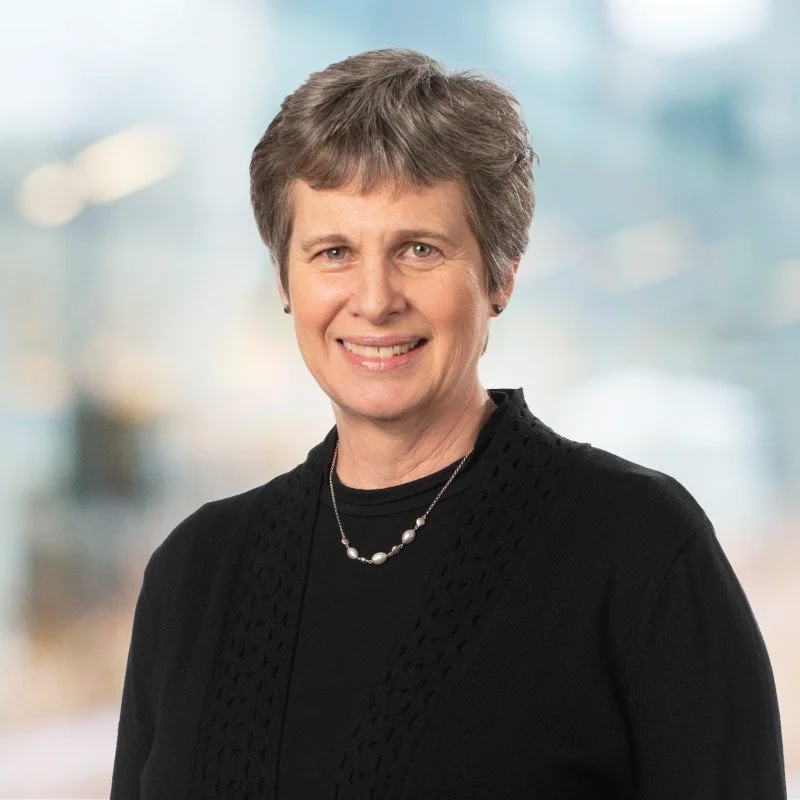
“Leadership and management are not one and the same. Good leadership is about bringing the best out in people and organizations. It's not easy to do. It’s a journey.”
About Vio
Violaine (Vio) Mitchell is a retired global health strategist with extensive experience in vaccine delivery and immunization financing. She most recently directed the Immunization Team at the Gates Foundation, directing a multi-million dollar budget, partnering with governments and global stakeholders to prioritize vaccine access and routine immunization services. Earlier, Vio led the Health Funds and Partnerships team, advancing sustainable financing for primary health care and engagement with alliances such as Gavi and the Global Financing Facility. Her career includes supporting community health and income generating projects in Cairo and health systems and infectious disease projects at the National Academy of Sciences. She holds degrees from Brown University and Harvard School of Public Health.
Q: Tell us about a time of crisis, when you were called to deliver resilient leadership.
COVID-19 is the most obvious crisis but sometimes there are crisis moments that don’t initially seem like it. In 2022, I was asked to lead the Immunization Team, which was newly constituted during a reorganization at the Gates Foundation. I deliberated quite a bit about whether to take on this new challenge. The Immunization Team was exhausted coming out of the pandemic, had been through a lot of organizational changes, and seemed disillusioned. I was tired, had a full suite of self- doubts, and wasn’t sure I had the energy and credibility to lead a team in a turbulent period in global health.. I started to think about how the people who were jaded would get excited again. I knew it wouldn’t be days or months to get the team to gel. It would likely take a year – possibly more.
Q: How did you navigate making important decisions during this time of crisis?
“Your job as a leader is not to please or pander to the more senior leader; they need you to challenge them, tell them what’s really happening, tell them what’s going on.”
As I was debating whether to take the Director of Immunization role at the foundation, I decided to share (and perhaps over share!) all my reservations and worries with our senior leadership. I shared my own vulnerability about not being a scientist, not being the smartest responder in the room. Looking back, I was a full-blown poster child for imposter syndrome. I worried (as it turned out unnecessarily) that external leaders would do “end runs” and effectively undermine my credibility. I also wanted to understand programmatically if we had the license to try and fail – we did.
Those open transparent conversations stood me well as I took on the directorship. Prior to taking on this role, I had spent a decade working with our senior leaders, and so figured I knew what I needed from them and what they needed from me. What I learned is that my job as Director of a large team was not to please or pander to leadership; they wanted to know the realities of the field. They welcomed debate and frank discussion even if they didn’t always agree with it.
Q: What were some behaviors that supported your own resilience?
“I believed strongly that, if we had a leadership team that worked together, spent time together, trusted each other and managed conflict within ourselves, we’d be more effective for the whole team.”
My blessing was living on Vancouver Island, having a farm. My husband, Tom, was amazing and picked up a lot of the slack. There’s a great deal of humility in having a farm - sheep get out, there are cougar and bear kills, bad weather, and frozen pipes. Amidst the day-to-day challenges in my professional life, the livestock still needed to be fed. The farm was tremendously grounding and helped me put all things in perspective.
In leading the immunization team, building a strong leadership team was key. I completely lucked out with the individuals who agreed to be part of our leadership team. We would meet frequently because I believed strongly that, if we had a leadership team that worked together, spent time together, trusted each other and confronted problems together, we’d be more effective for the whole team, our work, our partners. We didn’t always get it right but I’d advise anyone taking on a new role to build and rely on a strong leadership team. It just makes your job so much easier and more fun.
Q: What were some behaviors that supported your stakeholders’ resilience?
“Family first…”
Family first. This is so important. Everybody has stuff going on in their lives. Some of it we know about, much of it we don’t. Kids with challenges, aging parents, a spouse with depression. I set out to be sensitive to the “other” going on in peoples’ lives, whether staff or external partners. It’s all part of the package we each bring to our work. As a leader, I tried to foster an environment where people felt like they could share what they wanted to and that we completely had their back when things went awry.
The Gates Foundation is all about working with partners as it is our partners that do all the real work. The key for us as staff was how to work in partnership, how to learn, be supportive, challenge and question, and be good stewards of the very generous resources.
While Director, we worked with intention to form a team that could be proud of what they were doing, and to deliver the best that they could with our partners.. In the early days after our team formation, an internal foundation survey showed that we scored very poorly as a team on psychological safety. A year later, after everything we had put into place, we scored at 90%, way above expectations. I was thrilled. We had worked to create an environment where everyone could voice ideas and concerns. Did we nail it 100%? No. But hearing and registering concerns truly did make us a stronger team. A strong internal team is absolutely key to being able to support our external partners effectively.
A helpful tactic we applied as a team was to articulate the 3 or 4 norms that we wanted to hold ourselves to, in the first 6 months and first 9 months, and revisit them. Our team wanted to embrace being humble and mindful, speaking up and speaking your truth, not hiding problems – and yes to have a bit of fun along the way too. The norms proved to be very helpful. We encouraged individuals to speak up during and after team meetings : how well we were doing in keeping to our norms - did everyone speak up, did we listen to understand?
On a personal level and on my leadership journey, I also learned that, in general, people don’t like ambiguity. Supporting people to swim in ambiguity is an important skill for any manager and leader. A good manager can help individuals and organizations clarify goals and responsibilities, a good leader helps get them there.
The other big lesson for me is always surround yourself with brilliant and passionate people who are much smarter than you. When I took the job, I knew that I didn’t want to be in the job forever. I wanted to be sure that we were investing in our team, our partners, who we were bringing up through the ranks, and making sure that people have all the skills and tools the organization and our field might need.
Having said that, you can do everything you can to get people on the bus and feel better about things. Sometimes, there are people who aren’t there and are never going to be there, and giving them a way out can be helpful, although painful. It’s not about taking negative voices out but rather about negative behaviors. Toxicity, hiding behind veils, undermining other people - those behaviors need to be ruthlessly weeded out. Being a bit hard-nosed and helping those individuals to exit fast is needed. It’s probably good for them too.
Q: What ideas support you during challenging times? Mine, during this last year, has been to remind myself that “there are many good ways to do good in the world”.
“However difficult a conversation, I want the other person leaving that conversation feeling that they were heard and that there is a way forward.”
However difficult a conversation, I want the other person leaving that conversation feeling that they were heard and that there is a way forward. Sometimes people leave feeling a difficult conversation low, negative and crushed. If people can leave feeling heard, seeing where they can improve, see what they’ve been given that they can work on, that’s important. And this was true for me working both internally and externally.
Melinda French Gates once said that one of her greatest learnings on leadership came through looking at YouTube videos of conductors. Check out this Ted Talk of conductors. Without words, just the music, you see how people manage their organizations, who’s a leader, who’s a manager. My greatest learning in my career is that leadership and management are not the same. You need both and leadership is about bringing the best out in people and organizations. It's not easy. It’s a journey (at least it was for me.)